
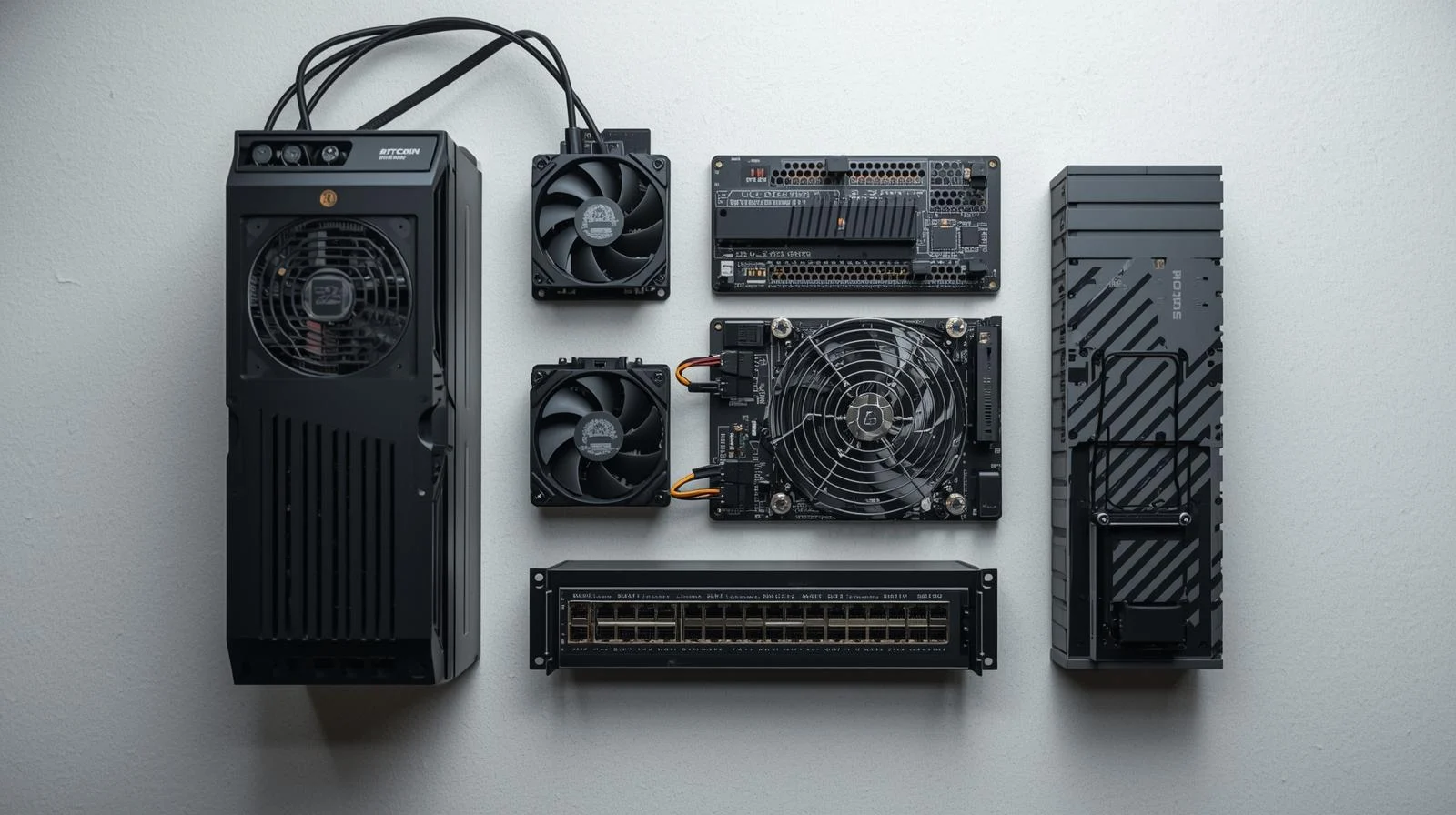
When people think about Bitcoin mining most of the attention goes to the miner itself. Hashrate, efficiency and model numbers usually take center stage.
In reality, many of the most common mining problems come from power delivery, cooling, and control components rather than the miner. Without the right accessories in place, even a high-quality ASIC miner can become unstable, inefficient, or fail to operate at its full potential.
Mining accessories are not optional extras but they are the foundation that allows mining hardware to run safely and consistently over time.
What Are Bitcoin Mining Accessories?
Bitcoin mining accessories are the essential tools that support a miner’s operation. They do not increase hashrate or mining output directly, but they play a critical role in how reliably and safely a miner runs.
These accessories help ensure stable performance, proper power delivery, effective cooling, and overall hardware protection. When the right tools are used, miners operate more consistently and tend to last longer under continuous load.
It’s also important to understand that every mining setup is different. Power requirements, airflow, and physical layout vary, which is why mining accessories are not one-size-fits-all and are usually selected based on the specific environment.
Power Supplies for Bitcoin Miners
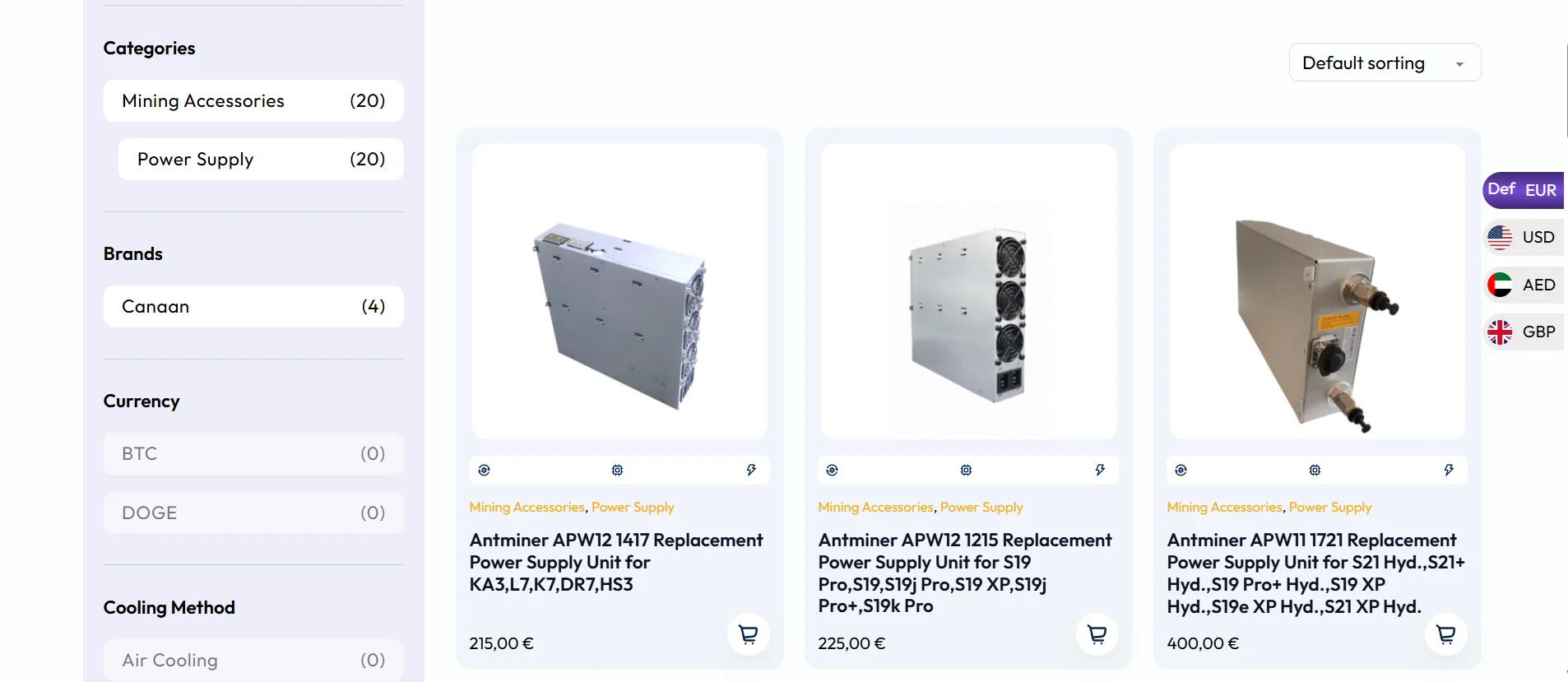
The power supply unit (PSU) is one of the most critical components in any Bitcoin mining setup. While the miner performs the hashing, the power supply determines how stable, efficient, and safe that operation actually is.
Bitcoin miners run under continuous load, often 24/7, which places constant stress on the power delivery system. A high-quality PSU ensures stable voltage, consistent power output, and reliable operation over long periods of time.
There is an important difference between stock power supplies that come bundled with some miners and external or replacement PSUs. Stock PSUs are designed to meet basic requirements, while external or replacement units are often chosen to match specific power environments, electrical standards, or redundancy needs.
Using the wrong PSU can lead to instability, unexpected shutdowns, overheating, and long-term hardware risk. This is one of the most common causes of mining downtime and avoidable equipment failure.
Because power requirements vary by miner model and by setup, power supplies are often selected separately rather than bundled, allowing miners to choose the option that best fits their electrical environment and operational needs. 👉 You can view the available power supplies for Bitcoin mining setups on Bitmern Shop here 🔌
PDUs (Power Distribution Units) in Mining Setups
A Power Distribution Unit (PDU) is used to safely and efficiently distribute electrical power to multiple mining devices from a single power source. In mining setups, PDUs play a much bigger role than simple power extension solutions.
When running more than one Bitcoin miner, standard household power strips are usually not sufficient. Miners draw continuous, high electrical loads, and consumer-grade power strips are not designed to handle that level of stress over long periods of time. This can lead to overheating, instability, or unexpected shutdowns.
PDUs are built specifically for environments where multiple devices operate under constant load. They provide better power handling, improved reliability, and cleaner cable management, which becomes increasingly important as a setup grows.
In smaller environments, such as a home rack, a PDU helps organize power delivery while keeping the setup safer and easier to manage. For mining shelves or larger home installations, PDUs allow multiple miners to operate from a single, properly rated power source. In container-based or professional setups, PDUs are essential for structured power distribution, monitoring, and long-term stability.
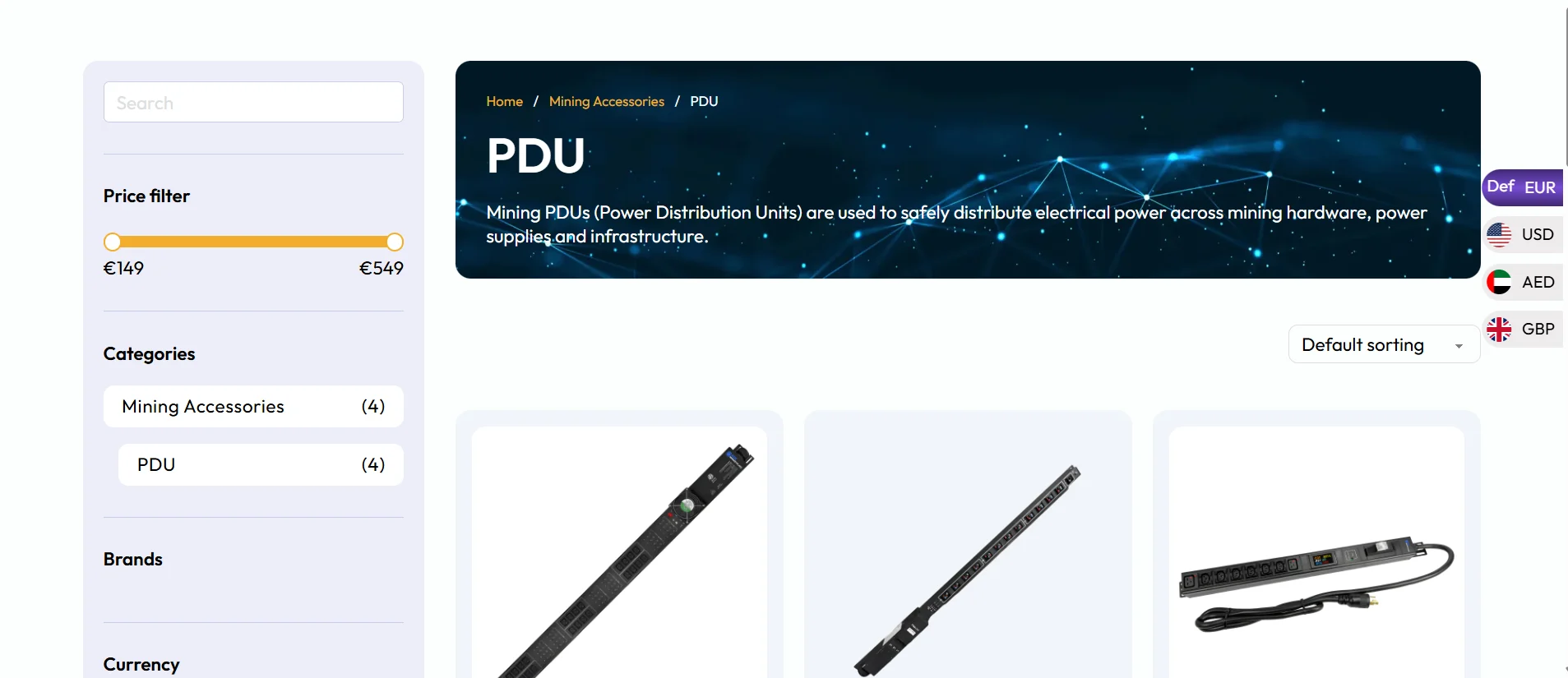
👉 View available PDUs on Bitmern Shop
Mining Fans: Cooling Is Not Optional
Heat is a constant factor in Bitcoin mining. ASIC miners generate significant thermal output during normal operation, and managing that heat is essential for stable performance.
While most miners include built-in fans, these are not always sufficient, especially in enclosed spaces, warm environments, or multi-miner setups. As temperatures rise, miners may throttle performance, become unstable, or suffer long-term hardware stress.
Proper airflow directly affects both efficiency and hardware lifespan. When heat is removed effectively, miners can operate closer to their intended performance levels while reducing wear on internal components.
In many setups, additional mining fans are used to improve overall airflow rather than replace built-in cooling. The goal is to move hot air away from the miner and maintain a consistent thermal environment.
It is also important to balance airflow and noise. High-airflow fans may increase cooling efficiency but can significantly raise noise levels, which matters in home or small-scale environments. Different fan designs are suited to different spaces, from home rooms to shelves and containers.
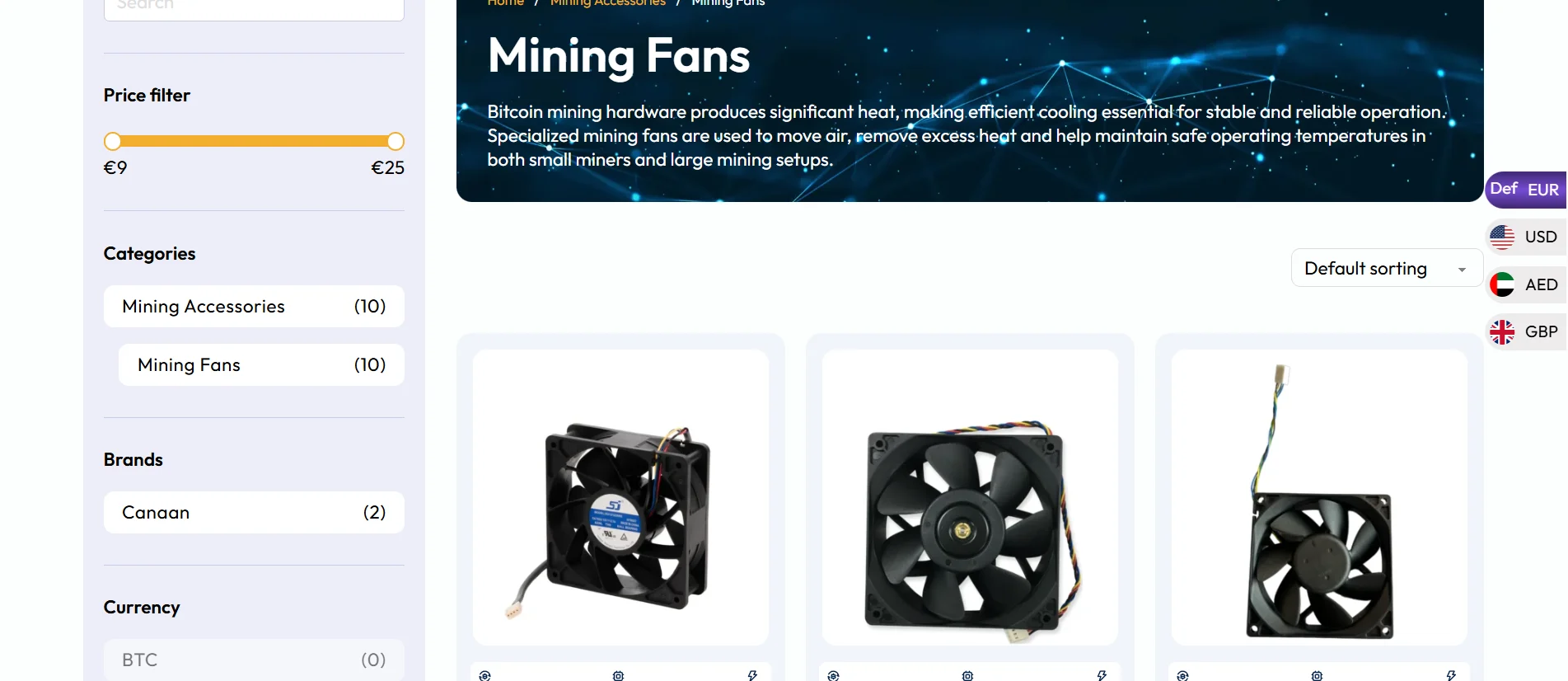
🌬️ View available Mining Fans on Bitmern Shop
Mining Cables and Power Cables
Mining cables are not “just cables.” In Bitcoin mining, power delivery runs under continuous electrical load, which places very different demands on cables compared to normal consumer electronics.
Proper mining cables are designed with the correct wire gauge, higher heat tolerance, and reliable connectors that can safely handle sustained current over long periods of time. Standard consumer cables are often rated for intermittent use, not for devices that draw power continuously, day and night.
Using the wrong cable can lead to excess heat buildup, gradual wear, connection instability, and in some cases real safety risks. Over time, this can result in reduced efficiency, unexpected downtime, or damage to both the cable and the miner.
Because power requirements and connector types vary between miner models and setups, mining cables are often selected and sold separately. This allows users to match the correct cable specifications to their specific hardware and electrical environment, rather than relying on generic solutions.
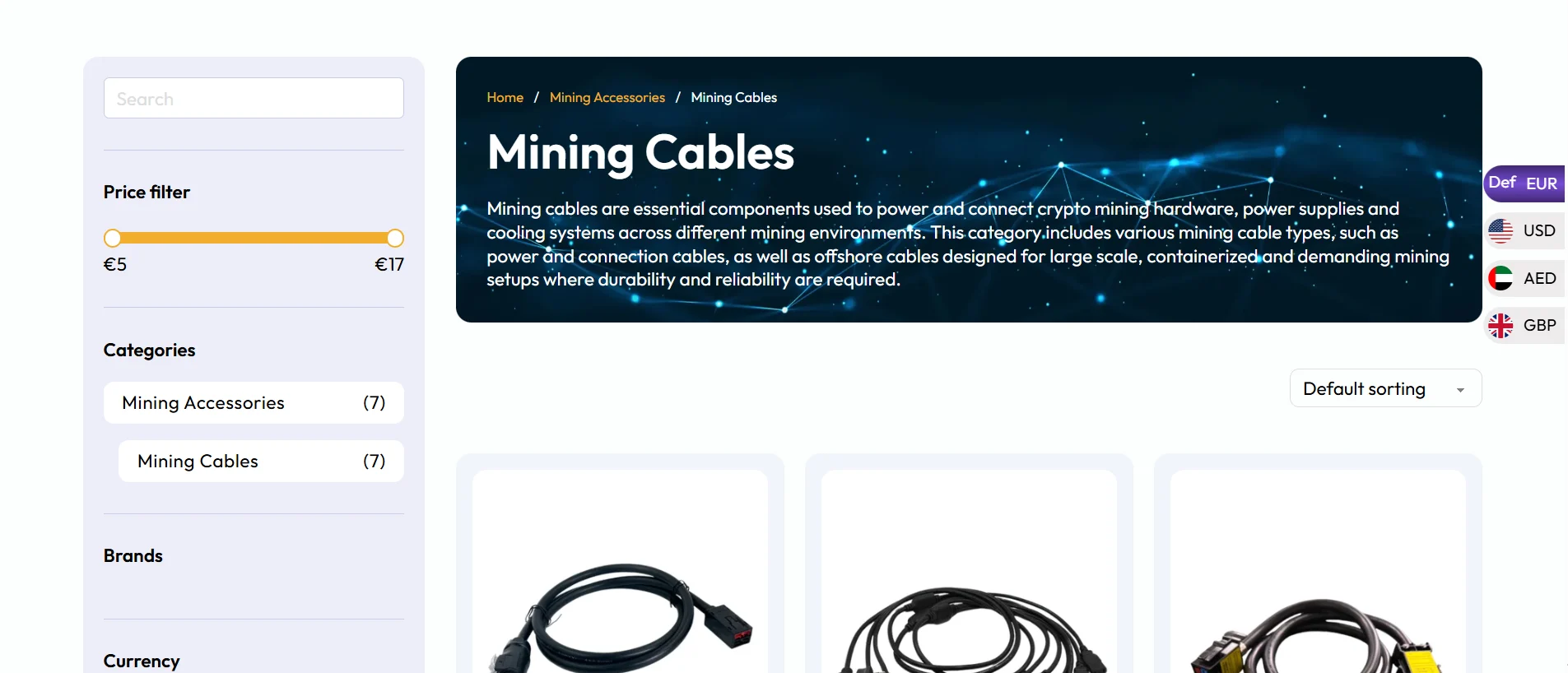
👉 View available Mining Cables on Bitmern Shop
Control Boards: When and Why You Need Them
The control board is the component responsible for managing how a Bitcoin miner operates. It controls communication, coordinates the hashing boards, and ensures the miner functions according to its firmware and configuration.
Under normal conditions, control boards are reliable and do not require frequent replacement. However, when a miner fails to boot, loses network connectivity, or behaves inconsistently despite stable power and cooling, the control board is often the source of the problem.
Replacing a faulty control board can restore a miner’s functionality without replacing the entire unit. For this reason, control boards are an essential part of maintenance and long-term operation, especially in setups where uptime is important.
Because control boards are model-specific and directly tied to a miner’s operation, they are typically offered as separate components, allowing users to source the exact part required for their hardware.
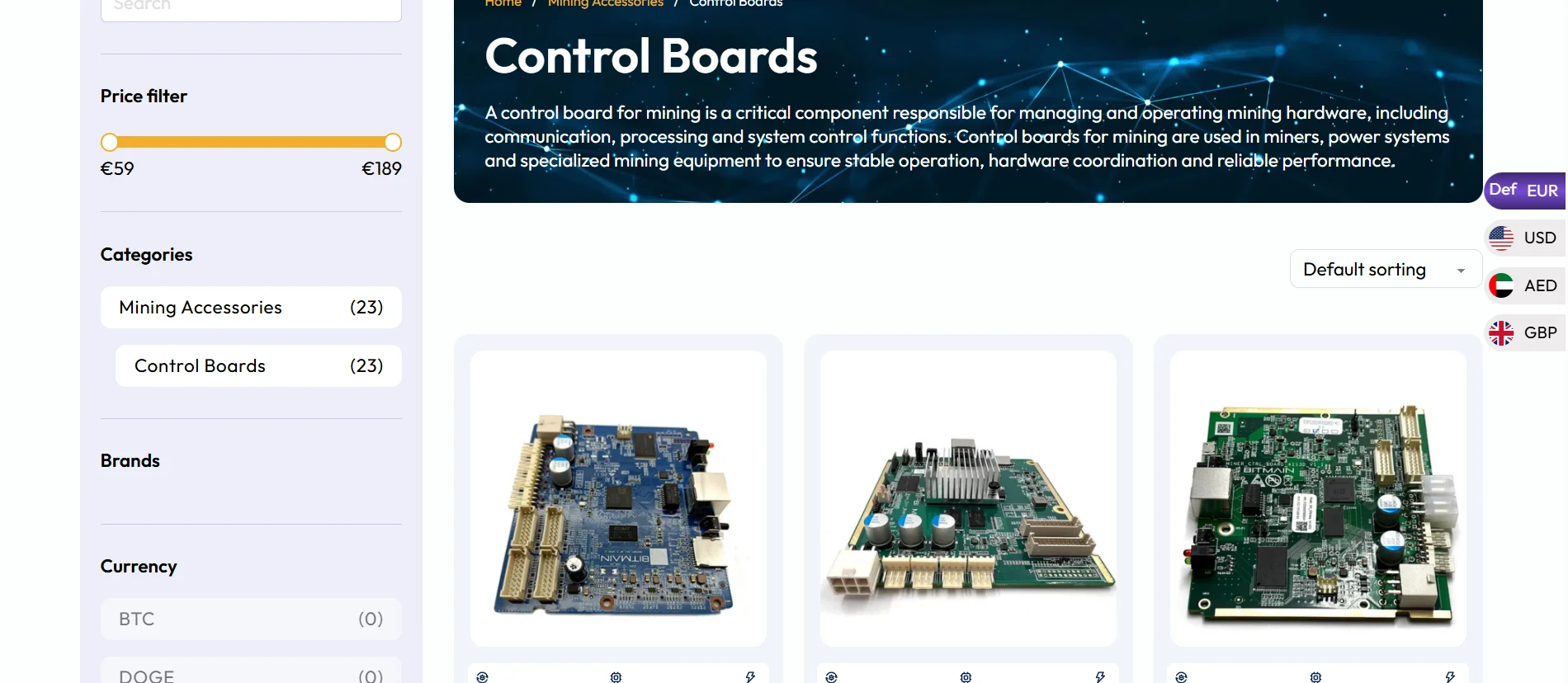
👉 View available Control Boards on Bitmern Shop
The key is understanding that there is no universal setup. A single home miner, a small rack, and a larger container-based operation all have different requirements when it comes to power supplies, PDUs, fans, cables, and control boards. Choosing accessories should always be based on your specific environment, electrical limits, and long-term goals.
For users who want flexibility, mining accessories are typically selected separately, allowing each setup to be built or upgraded as needed rather than forced into a one-size-fits-all solution.
If you are exploring options or planning upgrades, you can browse the available mining accessories by category in the Bitmern Shop and review what fits your setup best, at your own pace.