In 2026, Bitcoin mining is no longer an experimental hobby. It is a competitive, infrastructure driven activity where efficiency matters more than hype. This guide explains what Bitcoin mining is, how it works, what equipment you actually need, and what beginners should realistically expect before getting started.
What Is Bitcoin Mining?
Bitcoin mining is the process of validating transactions on the Bitcoin network and adding new blocks to the blockchain. Miners compete to solve cryptographic puzzles, and the first to find a valid solution earns the right to add the next block and receive the block reward.
Unlike other cryptocurrencies, Bitcoin uses a single algorithm SHA-256 and mining is performed exclusively with specialized hardware called ASIC miners.
There is no GPU mining, CPU mining, or “easy mode” for Bitcoin anymore. This is by design.
How Bitcoin Mining Works (In Simple Terms)
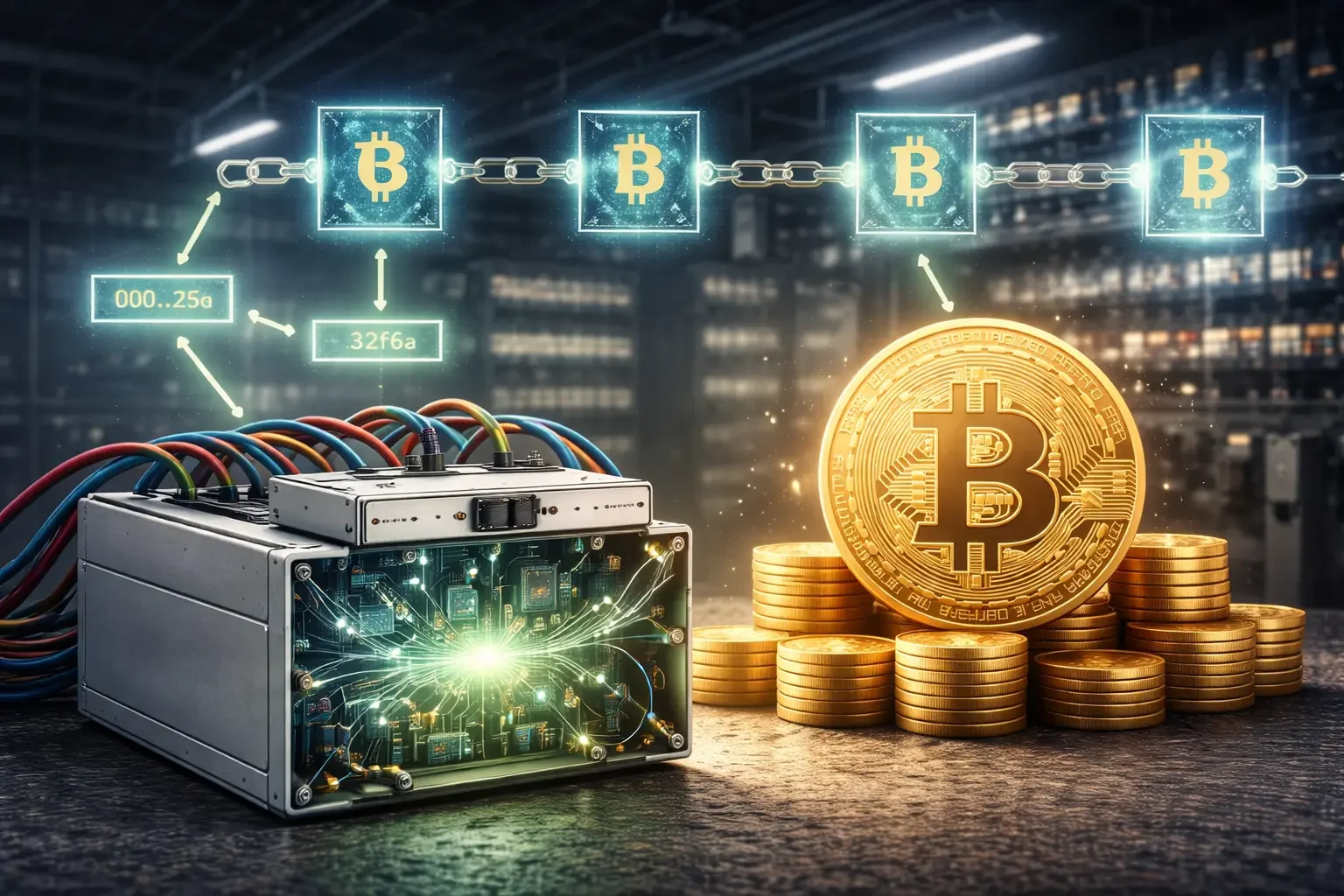
Bitcoin mining works through a combination of computing power, network rules, and economic incentives. At its core, it relies on three fundamental components that keep the Bitcoin network secure and operational.
Hashing and Proof of Work
Bitcoin miners use specialized hardware to perform trillions of cryptographic hash calculations every second. The goal is to find a hash that meets the network’s current difficulty target.
This process is called Proof of Work.
It ensures that adding new blocks to the blockchain requires real computational effort, making the network secure against attacks and manipulation.
Network Difficulty Adjustment
Bitcoin automatically adjusts its mining difficulty approximately every two weeks.
- When more miners and hash power join the network, difficulty increases
- When miners leave, difficulty decreases
This self adjusting system keeps Bitcoin block production close to one block every 10 minutes, regardless of how many miners are active.
Block Rewards and Transaction Fees
When a miner successfully finds a valid block, they earn a reward consisting of:
- The block subsidy (which decreases over time due to halvings)
- The transaction fees included in that block
As block subsidies continue to decline, transaction fees are expected to play an increasingly important role in Bitcoin mining revenue.
What You Need to Start Bitcoin Mining
This is where many beginners misunderstand Bitcoin mining. Unlike general crypto mining, Bitcoin has very specific requirements.
1. ASIC Mining Hardware
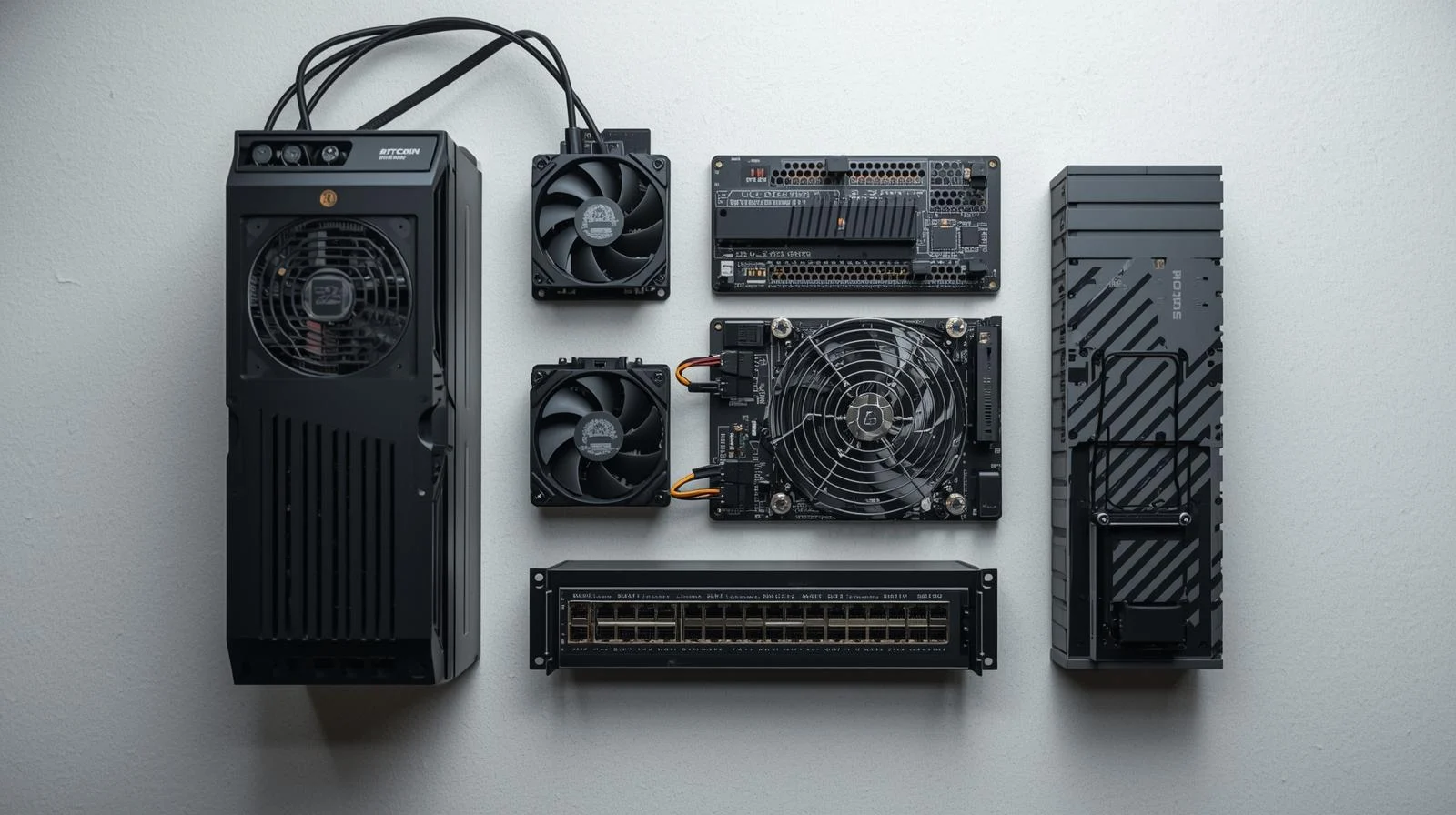
Bitcoin mining requires ASIC miners built exclusively for the SHA-256 algorithm. Mining Bitcoin with GPUs, CPUs, or standard computers is no longer viable.
When choosing ASIC hardware, miners should evaluate:
- Hashrate (measured in TH/s)
- Energy efficiency (J/TH)
- Total power consumption
- Cooling and noise requirements
Efficiency matters more than raw power.
2. Electricity and Power Costs
Electricity is the most critical factor in Bitcoin mining profitability.
A high performance miner running on expensive electricity will often lose money faster than a less powerful miner with low power costs.
Before purchasing mining hardware, you should understand:
- Your electricity price per kWh
- Whether your electrical system can support continuous load
- Local limitations related to noise and heat
3. Cooling and Installation Requirements
ASIC miners generate significant heat and noise during normal operation.
Proper cooling is essential and may include:
- Adequate airflow and ventilation
- Dedicated cooling solutions
- Liquid or hydro cooling for high performance setups
Poor cooling leads to reduced efficiency, hardware damage, and shorter miner lifespan.
Is Bitcoin Mining Profitable?
This is the most common question but also the most misunderstood one.
Bitcoin mining profitability depends on several interconnected variables:
- Electricity cost
- Miner efficiency
- Network difficulty
- Bitcoin market price
- Long term operating strategy
For many miners, Bitcoin mining is not about immediate profit. Instead, it is a long term Bitcoin accumulation strategy. Miners with efficient hardware, stable power access, and consistent uptime tend to outperform short term, speculative setups.
When electricity costs are high, profit margins become extremely sensitive and can disappear quickly.
Can Anyone Mine Bitcoin?
In theory, yes anyone can mine Bitcoin. In practice, only those with the right setup can do it sustainably.
Bitcoin mining is permissionless by design. There are no applications, licenses, or approvals required to participate. Anyone with the appropriate hardware, electricity, and internet connection can join the network and start mining.
However, this does not mean that Bitcoin mining is equally accessible or profitable for everyone.
Finding the Right Equipment for Your Setup
Because Bitcoin mining requirements vary widely choosing the right hardware depends on your goals, space, and power availability. Some users want to experiment and learn, others plan to mine from home, and some are building professional or industrial setups. This is where having access to the right equipment and the right variety becomes critical.
On Bitmern Shop, you can find everything needed to start or scale Bitcoin mining based on your specific setup, including:

- ASIC miners for professional and long term Bitcoin mining
- Home mining devices designed for residential environments
- Solo miners for beginners and educational use
- Mining containers for modular and scalable operations
- Essential mining accessories, such as power cables, power distribution units, and cooling components
Instead of forcing a one size fits all solution, having access to different mining categories allows users to choose hardware that actually fits their environment and expectations.
🔔 Do not Forget to Subscribe to our newsletter 📧 today and never miss important updates, product launches, or availability announcements.
What Makes Bitcoin Mining Accessible and What Doesn’t
While anyone can mine Bitcoin, success depends on several real-world constraints:
Hardware requirements
Bitcoin mining requires ASIC miners specifically designed for the SHA-256 algorithm. Mining Bitcoin with a regular computer, GPU, or laptop is no longer possible in any meaningful way.
Electricity cost and availability
Mining runs 24/7. High electricity prices can quickly turn mining into a loss, regardless of how powerful the hardware is.
Noise, heat, and space
ASIC miners generate significant noise and heat. Without proper ventilation and space, operating them becomes impractical, especially in residential environments.
Long-term commitment
Bitcoin mining rewards consistency, uptime, and efficiency. It is not a short-term or “try it for a week” activity.
Who Bitcoin Mining Is Realistically Suitable For
Bitcoin mining tends to work best for:
- Users with access to stable, reasonably priced electricity
- Individuals or businesses willing to plan for cooling and infrastructure
- Miners with a long-term view rather than short-term profit expectations
For users without these conditions, Bitcoin mining may still be educational, but scaling profitably becomes difficult.